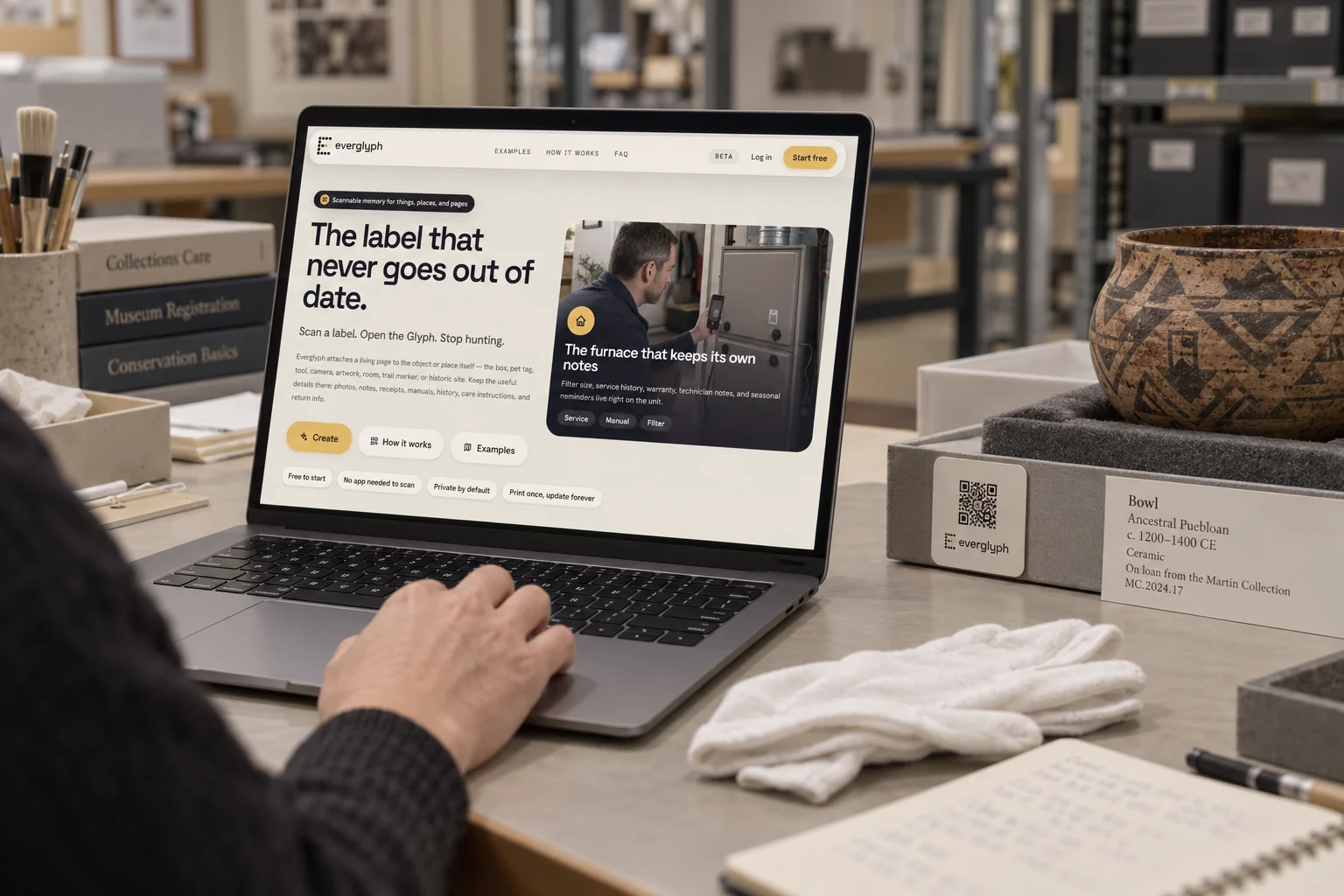

 Living pages for physical things.
Everglyph is a public-beta product for attaching a living, updateable page to an object or place through a scannable label.
At a glance
Project snapshot
- Audience
- People and teams documenting objects, places, events and specialist collections.
- Studio role
- Product strategy · Naming/identity · UX/UI · Record-system design · Build
- Working platform
- Living, updateable pages attached to objects and places through scannable labels.
- Current state
- Public beta
Physical use cases
Records people can open from the object itself
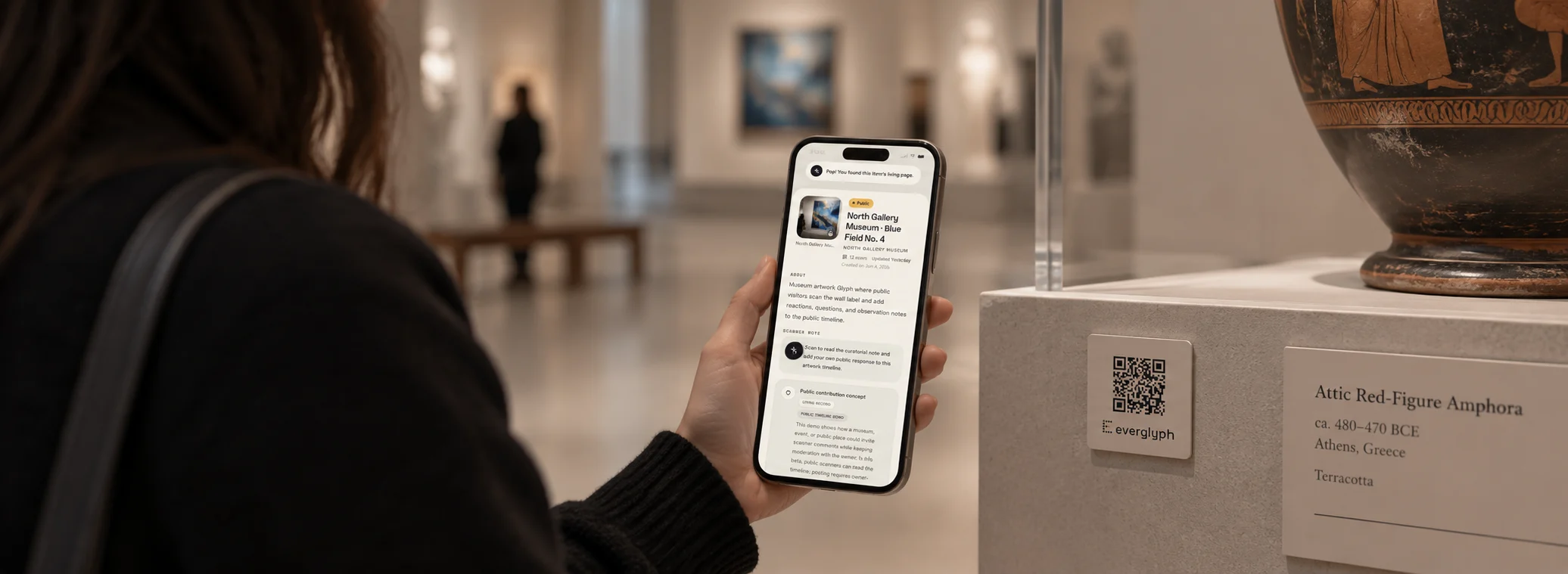
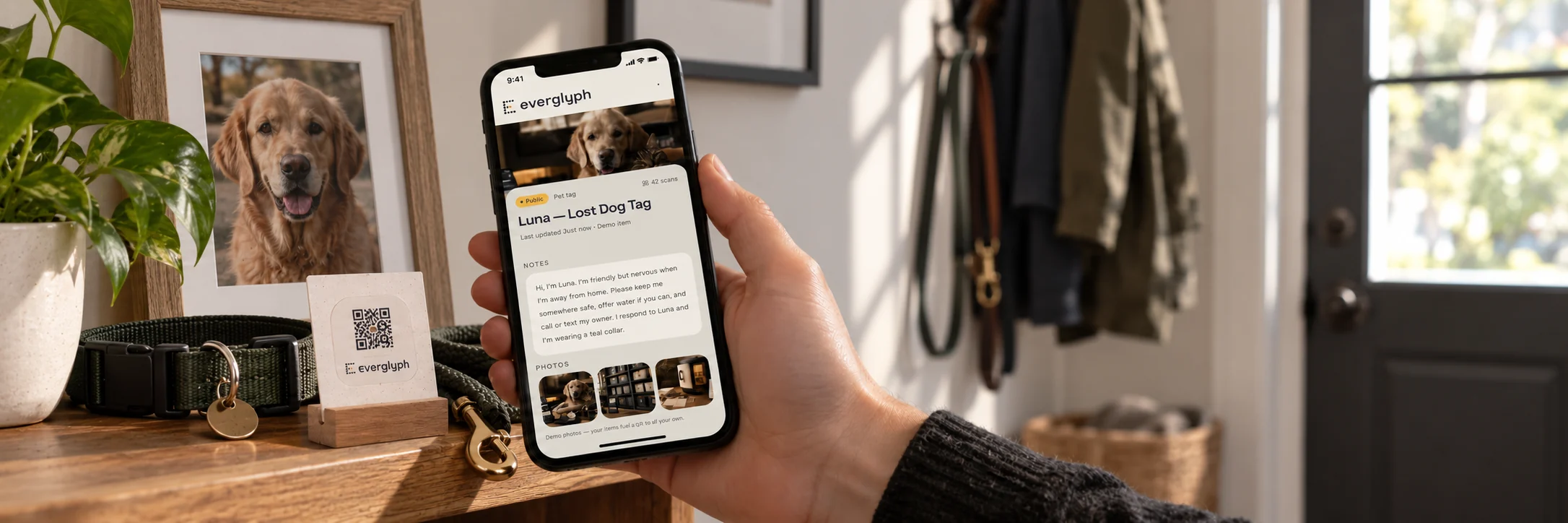
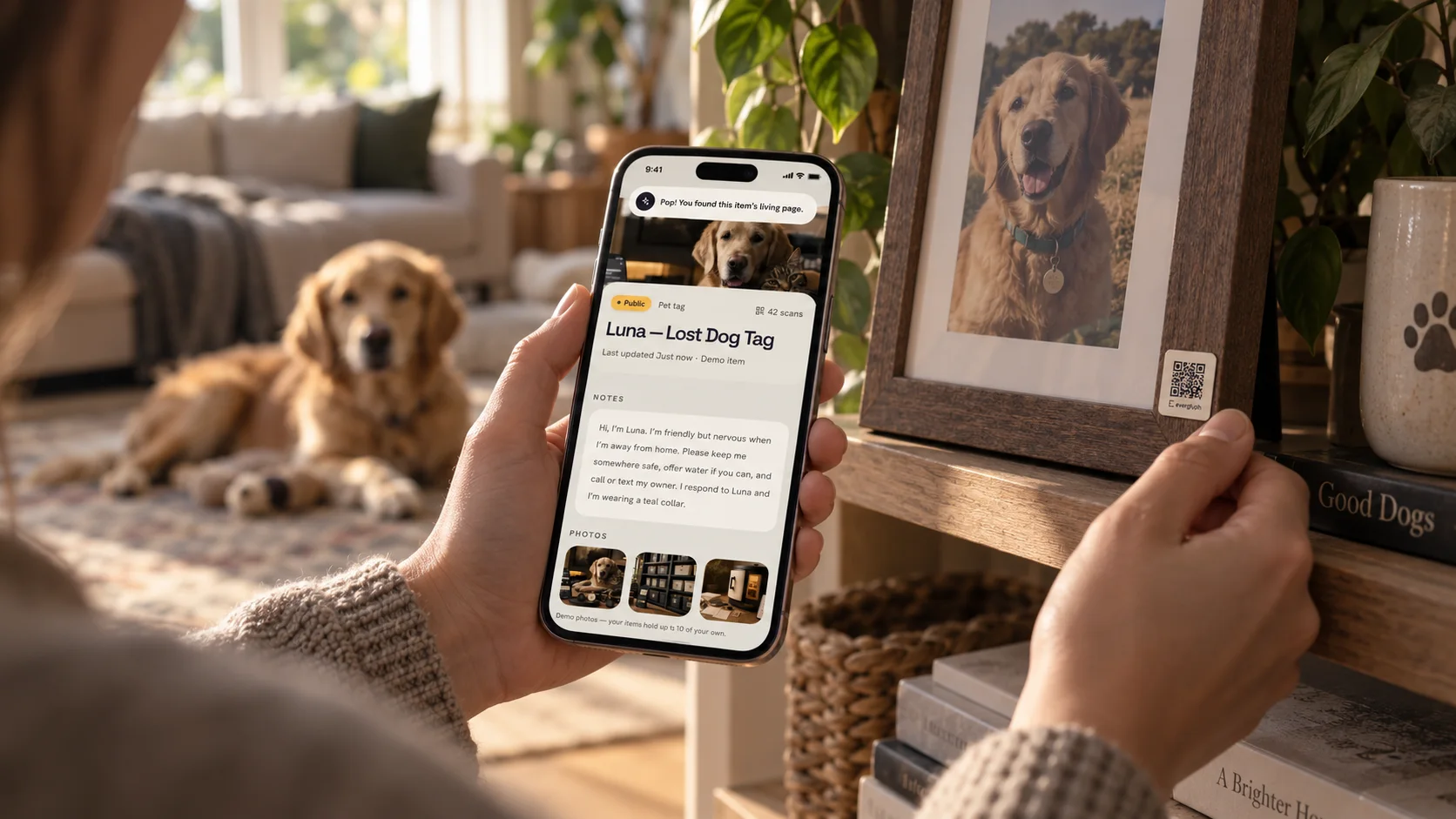
A scan might need to identify a pet, explain an artwork, preserve care notes or hold an event memory. Everglyph keeps that public page updateable after the label is printed.
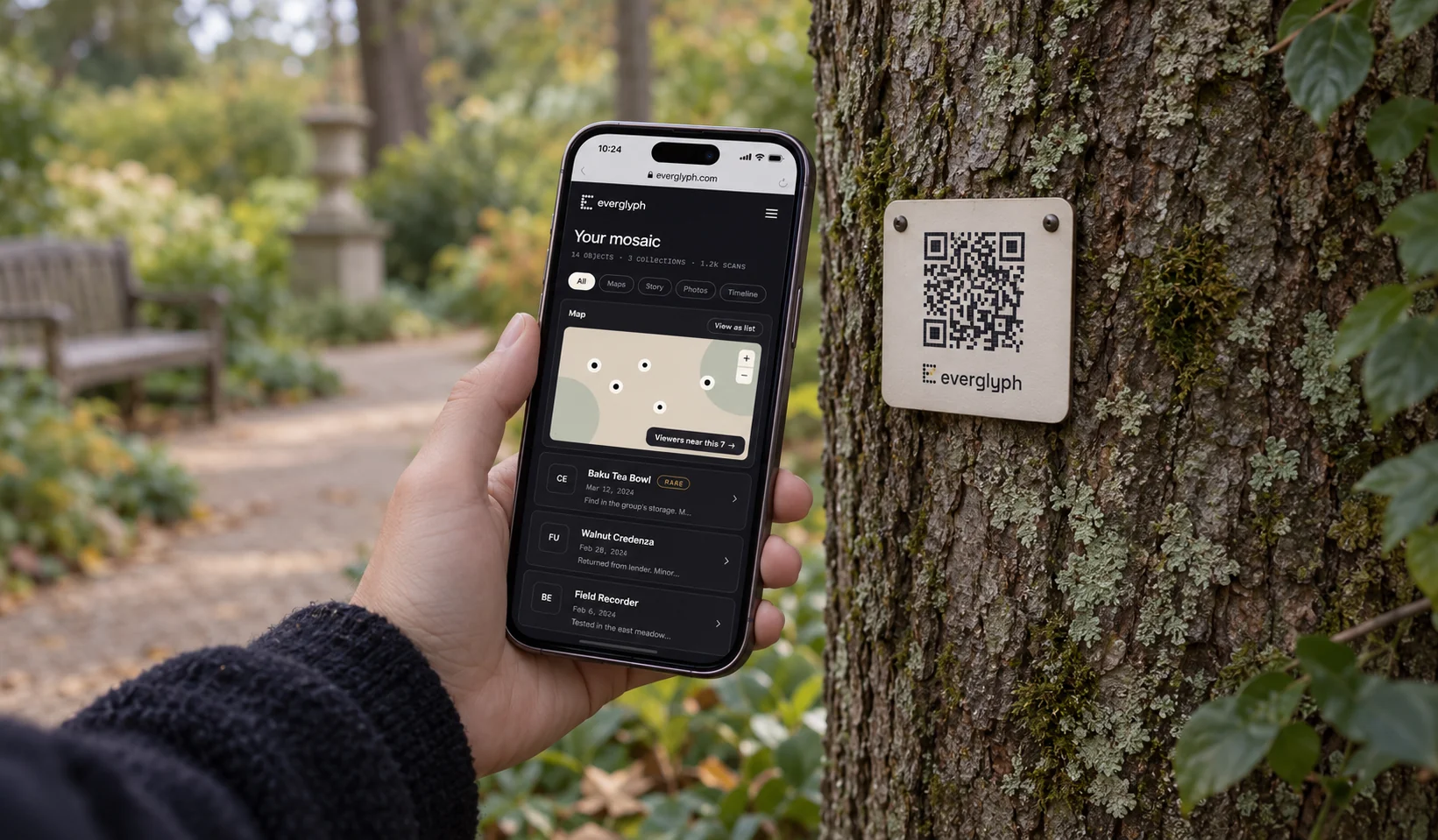
Museum registrar
01 Product premise
Keep the record with the thing it describes
Information and history often become separated from the object, artwork, room, record or place they describe. When that happens, the useful context is hard to find, hard to update and hard to share at the moment someone needs it.
Everglyph gives the owner a page that can be printed once and updated over time. A scanner opens the public experience in the browser without installing an app, while the owner controls what remains public or private.
02 Experience
Print once, update over time
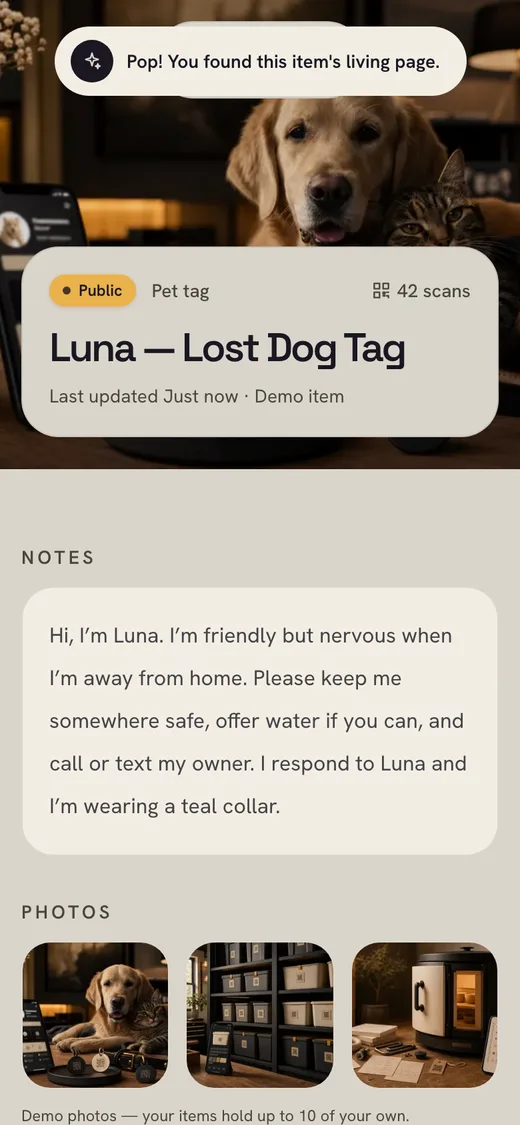
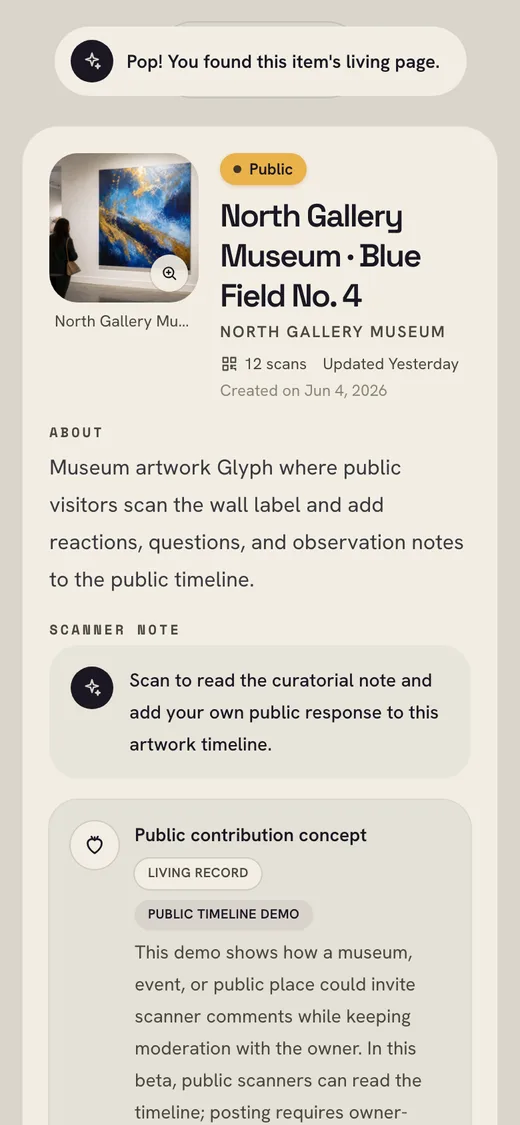
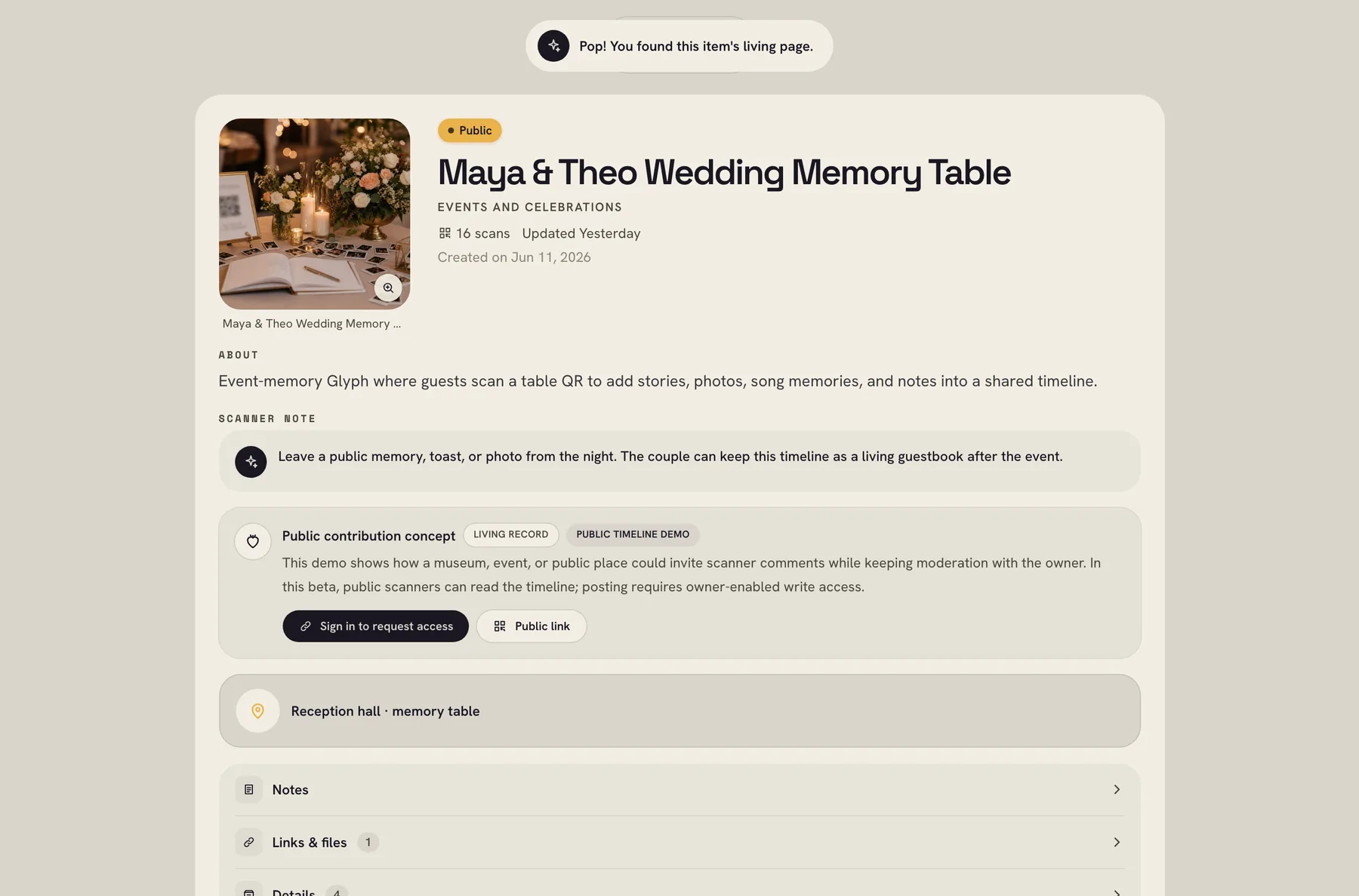
The public scan has to be calm, immediate and useful in the physical world: a phone at a doorway, a label on a pet item, a tag beside artwork, or a card at an event.
03 What BIGGFISH brought
One flexible platform for many kinds of records
BIGGFISH shaped the product, named it, built its identity and designed the experience before carrying it into working software.
Mobile-first scanner view
Scanning opens a clear public page quickly, with no app required for the person reading it.
Owner and scanner separation
The product distinguishes owner controls from the public scanner experience so publishing choices remain understandable.
Flexible physical-world templates
The system can describe objects, places, events and collections without narrowing the product to one use case.
04 Why it works this way
Choices behind the public beta
Calm record hierarchy
The page structure puts identity, status and essential context ahead of dense history, so a scan can answer the immediate question first.
Updateable by design
A printed label should not freeze the record. The page can change as the object, place or event history changes.
Broad positioning
The language supports personal objects, pets, tools, artworks, rooms, places, events, records and specialist collections without forcing one market story.
A living page makes physical context easier to find, update and share.